
How to choose the right wall clock?

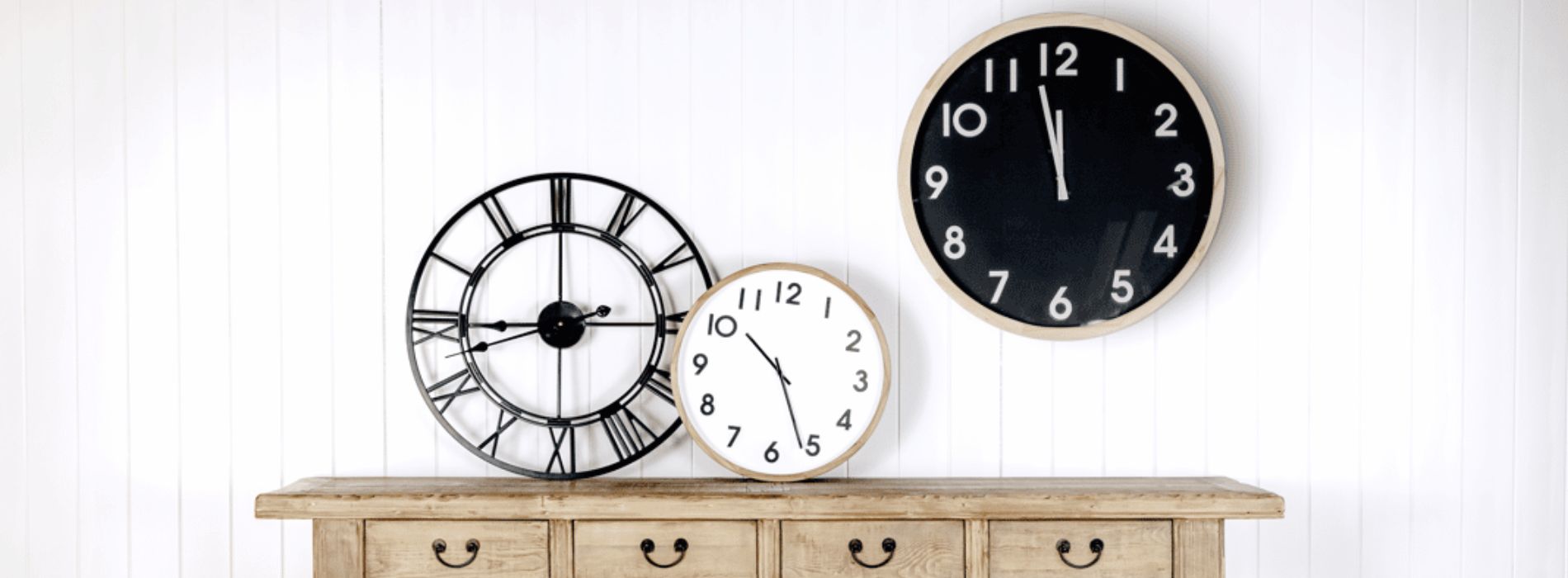
How to choose a wall clock
Choosing the perfect wall clock requires defining your needs and your style, selecting the right type of clock (analogue, digital, pendulum), considering materials and colours in harmony with your décor, and choosing the type of movement (quartz, mechanical, continuous) suited to your preferences. Follow these steps to find the ideal wall clock for your interior.
Introduction
The art of interior decoration rests on a multitude of details, large and small, that contribute to creating a unique and personal atmosphere in our living spaces. Among these elements, the wall clock holds a special place. It goes far beyond its primary function of telling the time; it also embodies the style, character and elegance of a room. In this article, we will explore in depth the process of choosing a wall clock, highlighting the various aspects to consider in order to make this functional accessory a true aesthetic gem within your interior.
The wall clock, whether discreet or bold, modern or classic, can serve as a centrepiece in a living room, a kitchen, a bedroom, or even an office. It embodies the passage of time, but it can also reflect your personality and the character of the room. Throughout this article, we will explore how to choose the best wall clock to meet your needs while harmonising with your decorating style. To do so, we will cover the following points:
-
Define your needs and your style
How to choose a wall clock that matches both your practical needs and the aesthetics of your space.
-
Choose the type of clock
An exploration of the different types of wall clocks, their unique characteristics and their impact on interior decoration.
-
Materials and colours
How materials and colours influence your choice of wall clock and its integration into the room.
-
Clock movement
The different types of clock movements and their impact on precision and style.
-
Maintenance tips
Tips to ensure the longevity and beauty of your wall clock over time.
By the end of this article, you will be armed with the knowledge needed to make an informed and aesthetically rewarding choice when it comes to wall clocks, helping to make your interior space a place that is both functional and aesthetically pleasing.
Let us begin by exploring how to define your needs and your style to choose the perfect wall clock.
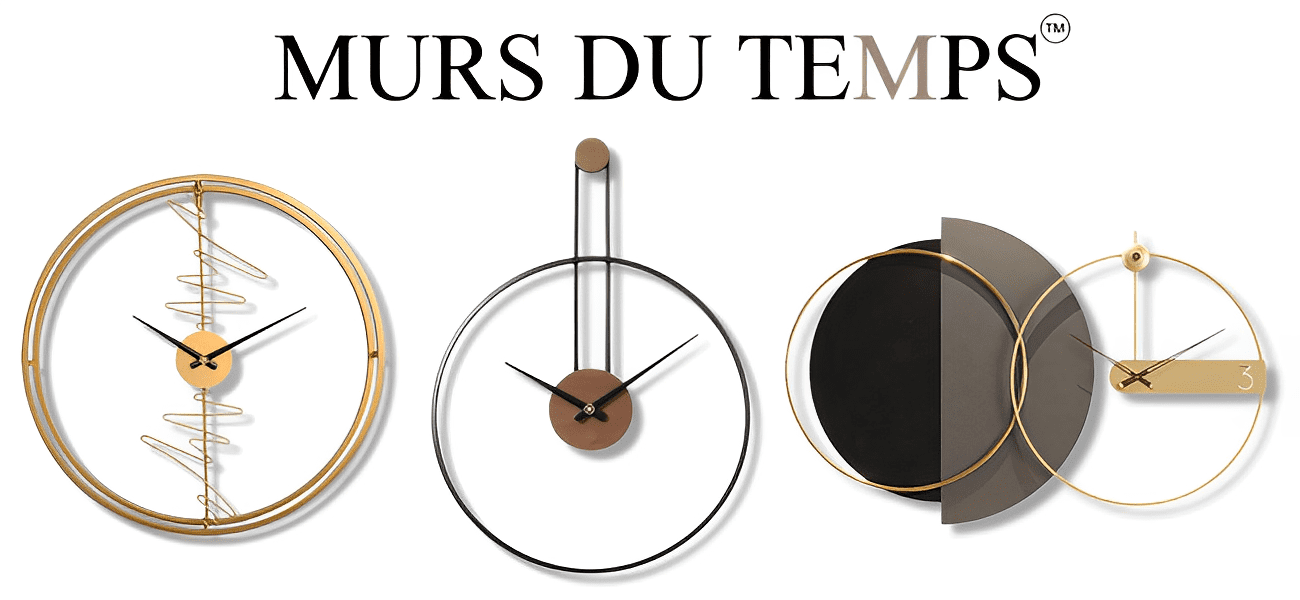
Define your needs and your style to choose a wall clock
When you are considering adding a wall clock to your space, it is essential to start by clearly defining your needs and thinking about your personal style. This first step will help guide your choices and allow you to select a wall clock that not only displays the time, but also becomes a centrepiece of your interior decoration.
-
Purpose of the wall clock:
First and foremost, ask yourself about the primary purpose of your wall clock. Do you want it to serve mainly a practical function, displaying the time clearly and accurately? Or are you looking for a clock that adds an aesthetic dimension to your space, even if it is not necessarily the most precise? Perhaps you are looking for a balance between these two aspects. By clearly defining your needs, you will be better able to direct your choice towards an analogue wall clock, a digital one, or another type that matches your expectations.
-
Decorating style:
Every space has a unique decorating personality, and your wall clock must integrate harmoniously into that whole.(Decorating ideas with a wall clock) Consider the predominant decorating style of the room where you plan to place the clock. Is your décor modern, minimalist, vintage, classic, or rather eclectic? The choice of clock should reflect that style. For example, a modern wall clock with clean lines and a minimalist design may suit a contemporary décor, while a vintage clock with an aged look may fit perfectly in a retro-style decoration.
-
Size and placement:
The size of your wall clock is a crucial factor to consider. It should be proportional to the available space and visible from the spots where you want to read it. A clock that is too small risks getting lost on a large wall, while an overly imposing clock can feel overwhelming in a smaller space. Measure the intended location for your wall clock and take into account visibility from the main vantage points of the room. Furthermore, the placement should be chosen carefully so that the clock serves as a central element of the decoration.
By defining your needs and taking into account your decorating style, size and placement, you will be better prepared to choose a wall clock that integrates perfectly into your interior while meeting your practical and aesthetic expectations. The next step will be to explore the different types of wall clocks to find the one that best matches your criteria.
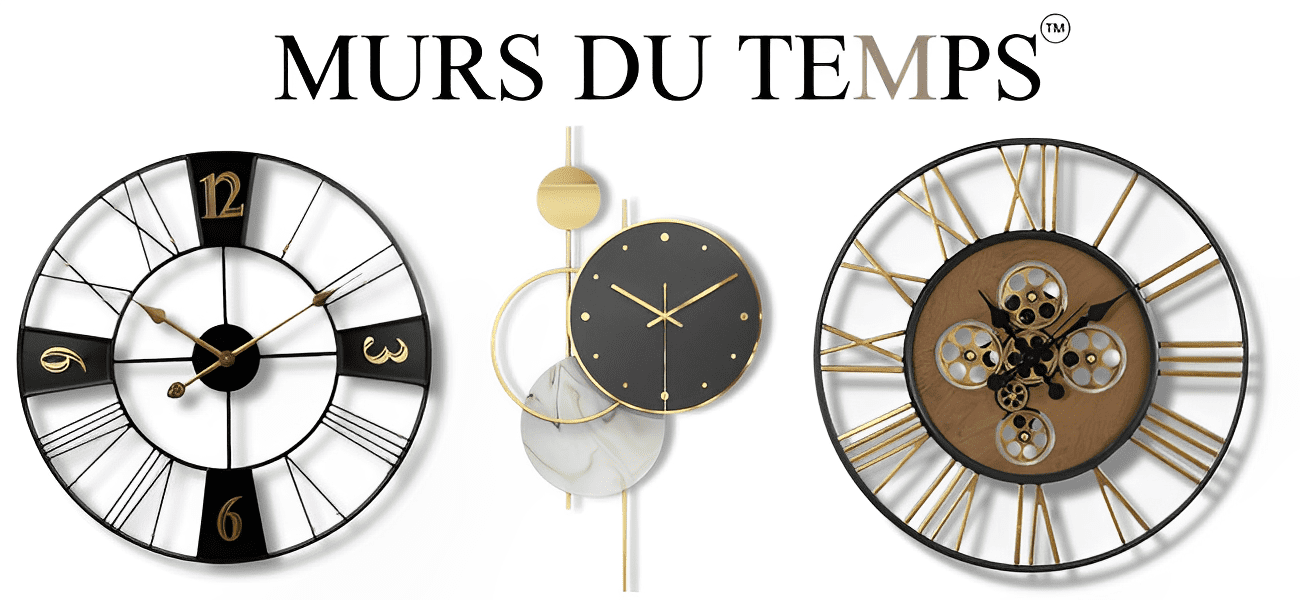
Choose the type of clock
When looking to select a wall clock, you will be faced with various types of clocks, each with its own characteristics and aesthetics. It is essential to understand these options in order to choose the one that best suits your space.
-
Analogue clocks:
Analogue clocks are the most traditional and classic. They display the time with hands that rotate around a dial. These clocks have a timeless charm and can fit into various decorating styles. However, they may be less precise than digital clocks and sometimes require regular maintenance to ensure their accuracy.
-
Advantages:
- Aesthetically appealing and timeless.
- Integrate well into classic, vintage and traditional décors.
- Offer smooth hand movement.
-
Disadvantages:
- Less precise than digital clocks.
- Occasionally require manual adjustment to maintain accuracy.
-
-
Digital clocks:
Digital clocks display the time in the form of numbers, often with great visibility. They are modern and functional, suited to contemporary spaces.
-
Advantages:
- Easy to read the time.
- High precision.
- Ability to display other information such as the date or temperature.
-
Disadvantages:
- Can appear less warm or decorative than analogue clocks.
- Less versatile in terms of style.
-
-
Pendulum clocks:
Pendulum clocks are a specific category of analogue clocks equipped with a pendulum mechanism. They often evoke a traditional and elegant atmosphere.
-
Advantages:
- Elegant and decorative.
- The pendulum adds a touch of authenticity and movement.
- Well suited to classic and vintage interiors.
-
Disadvantages:
- Require careful maintenance to keep the pendulum accurate.
- Can be more fragile than standard clocks.
-
-
Special wall clocks:
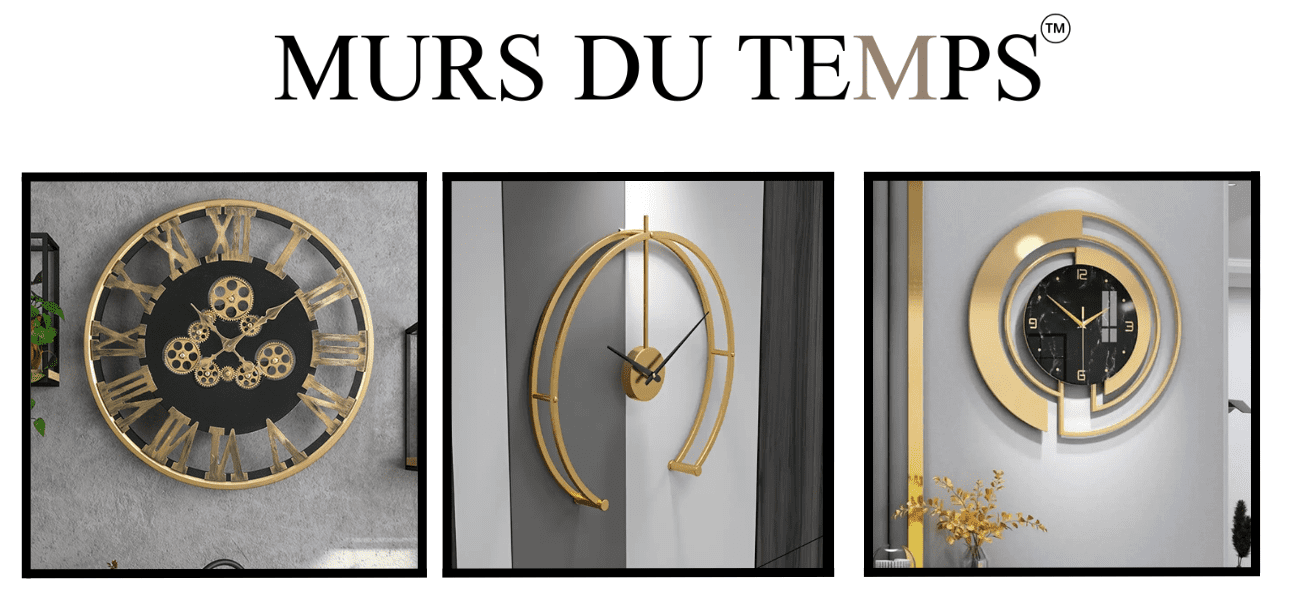
Beyond the traditional types, there is a wide variety of special wall clocks, including clocks with exposed gears, LED clocks, artistic clocks, and more. These clocks are often unique conversation pieces that can be chosen for their visual impact.
-
Advantages:
- Create a unique and original atmosphere.
- Can be works of art in their own right.
-
Disadvantages:
- May not be as functional as traditional clocks.
- Their aesthetic may not suit every décor.
-
The choice of clock type affects the readability of the time and the overall style of your space. It is therefore important to consider your aesthetic preferences and practical needs before making your choice. Whether you opt for an analogue, digital, pendulum or special clock, make sure it integrates harmoniously into your interior decoration while meeting your expectations in terms of functionality.
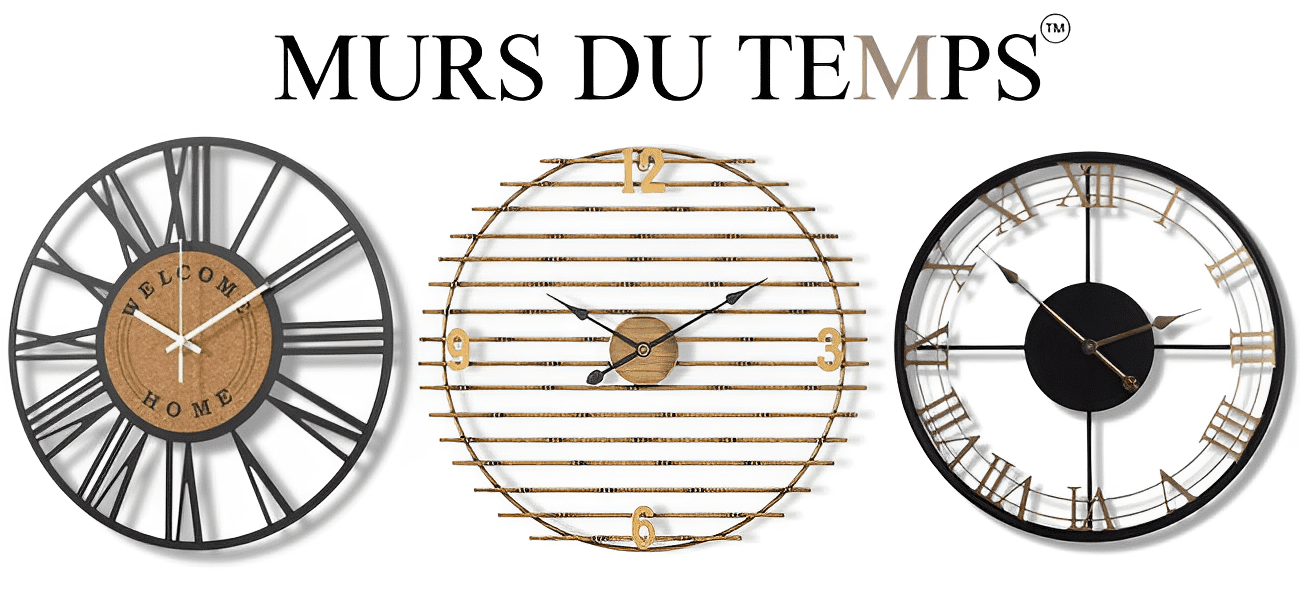
Materials and colours
Choosing the materials and colours for your wall clock is a crucial step in ensuring its harmonious integration into your interior décor. Each material and colour can evoke a different atmosphere, so it is essential to make thoughtful choices.
-
Commonly used materials:
-
Wood
Wooden wall clocks offer a warm and natural feel. They are versatile and can integrate into a variety of styles, from rustic to modern.
-
Metal
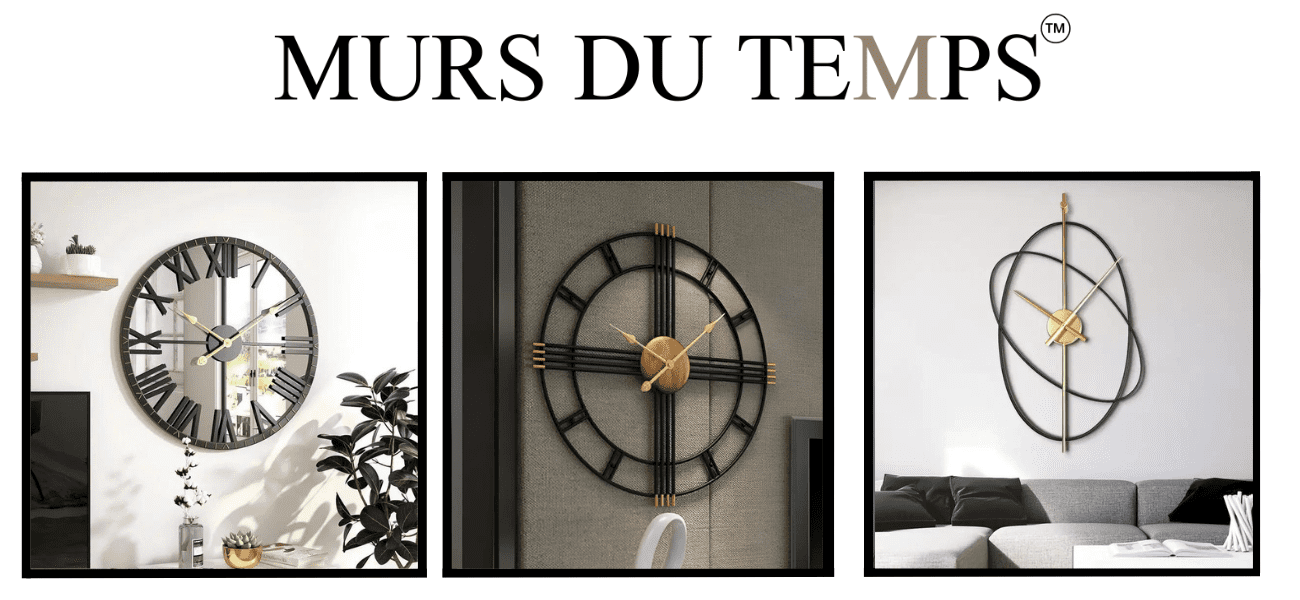
Metal wall clocks have a contemporary and industrial look. They are often lightweight and durable, ideal for modern spaces.
-
Plastic
Plastic clocks are lightweight and affordable. They are available in a wide range of colours, making them suited to a more playful or modern decoration.
-
Glass
Glass wall clocks are elegant and can create a mirror effect, visually enlarging the space. They are ideal for elegant and contemporary spaces.
-
-
The importance of colour and finish:
-
Colour
The colour of your clock should be in harmony with the rest of the room. If your decoration is dominated by neutral tones, a colourful clock can add a striking touch. Conversely, if your room is already colourful, a wall clock in neutral tones can balance the palette.
-
Finish
The finish of the clock can range from matte to glossy, from aged to modern. An antique gold finish can evoke a retro atmosphere, while a glossy finish can add a contemporary touch. The finish should harmonise with the overall style of the room.
-
-
Matching other decorative elements:
The wall clock should not be an isolated element, but rather integrate into the overall picture of the room. Here are some tips for matching your clock well:
-
Room elements
Take into account the furniture, curtains, cushions and other decorative elements in the room. Try to choose a clock that shares colour, texture or style characteristics with these elements.
-
Room theme
If your room follows a particular theme, such as the industrial style, bohemian style or Scandinavian style, look for a wall clock that matches that theme.
-
Layout and proportion
Make sure the clock is proportionate relative to the available wall surface. Avoid having it overwhelmed by other elements or dominating the space excessively.
-
In summary, the choice of materials, colours and finishes for your wall clock is an important step in creating a cohesive atmosphere in your space. Make sure your clock harmonises with the rest of the room and contributes to the overall aesthetic of your interior décor.
Clock movement
The movement of a clock is the internal mechanism that allows the clock to measure time. There are several types of movements, each with its own advantages and disadvantages in terms of precision, operation and noise. Understanding these differences is essential for choosing the wall clock that best suits your needs.
-
Quartz movement
-
Advantages:
- High precision: Quartz clocks are known for their accuracy. They are generally very reliable and only need periodic battery changes to maintain their precision.
- Low cost: Quartz clocks are often affordable.
-
Disadvantages:
- Second-by-second movement: Quartz clocks generally have a stepping movement, meaning the second hand moves in discrete jumps rather than sweeping continuously. Some people may find this less visually pleasing.
- Ticking noise: Although the ticking is often very quiet, it is present in most quartz clocks.
-
-
Mechanical movement
-
Advantages:
- Traditional mechanics: Mechanical clocks operate with a complex mechanism that can be fascinating to observe. They are appreciated for their nostalgic charm.
- No ticking: Mechanical clocks generally do not make a ticking noise, making them silent.
-
Disadvantages:
- Less precise: Mechanical clocks are generally less accurate than quartz clocks and may require periodic adjustment.
- High cost: High-quality mechanical clocks can be expensive to purchase and maintain.
-
-
Continuous sweep movement
-
Advantages:
- Smooth movement: Continuous sweep clocks have a smooth gliding of the hands, which can be visually soothing.
- Silent: They generally do not produce a ticking noise.
-
Disadvantages:
- Variable precision: The accuracy of continuous sweep clocks can vary, and they may require more frequent adjustment than quartz clocks.
- Variable cost: The price of continuous sweep clocks can vary depending on quality and brand.
-
How to choose the movement that best suits your needs:
The choice of movement depends on your personal preferences and the purpose of the clock in your space:
-
If precision is essential and ticking does not bother you, opt for a quartz clock.
-
If you are looking for traditional charm, a mechanical clock can be an excellent choice, but keep in mind that it may require regular maintenance.
-
If you prefer a smooth and silent movement, a continuous sweep clock may be the solution.
Ultimately, the choice of movement will depend on your personal preference, your tolerance for noise and your budget. Whatever type of movement you choose, make sure it contributes to the overall atmosphere of your space.
Maintenance tips
Regular maintenance of your wall clock is essential to ensure its longevity and proper functioning. Here are some tips for taking care of your wall clock effectively:
-
Dust and cleaning:
- Dust can accumulate on the dial and hands of the clock, which can affect readability and appearance. Use a soft, dry cloth or a soft-bristled brush to remove dust regularly.
- If necessary, use a slightly damp cloth to remove stubborn stains, avoiding any direct contact with the internal mechanism.
-
Avoid shocks and vibrations:
- Excessive shocks or vibrations can unbalance the clock mechanism and affect its precision. Make sure the clock is securely fixed to the wall and is not at risk of falling.
- Avoid placing the wall clock near sources of vibration such as speakers or noisy household appliances.
-
Battery replacement:
- If your clock runs on batteries, replace them regularly following the manufacturer’s recommendations. Use high-quality batteries to ensure continuous operation.
- When replacing batteries, make sure to respect the polarity indicated in the battery compartment. Failing to observe the correct polarity can damage the clock movement.
-
Minor repairs:
- In the event of minor problems such as misaligned hands or loose screws, minor repairs can be carried out.(How to Repair a Wall Clock) However, if you are not comfortable with mechanics, it is preferable to call upon a professional watchmaker.
- For mechanical clocks, a qualified professional can also carry out the periodic maintenance necessary to keep the movement accurate.
-
Be mindful of environmental conditions:
- Extreme variations in temperature and humidity can affect the functioning of certain clocks. Avoid exposing your clock to inappropriate environmental conditions.
- If your clock is intended for outdoor use, make sure it is designed to withstand the elements.
-
Consult the manufacturer’s manual:
- Each wall clock may have specific maintenance requirements. Consult the instruction manual provided by the manufacturer for advice specific to your model.
By following these maintenance tips, you can extend the lifespan of your wall clock while maintaining its proper functioning and aesthetic appearance. Remember that if major problems arise or if you have any doubts about maintaining your clock, it is best to consult a professional clockmaker for appropriate repairs or adjustments.
We hope this article has been helpful in guiding you to choose the right wall clock.
If you would like to receive our free murs du temps e-book “THE ULTIMATE GUIDE” to choosing the best wall clock for your home, further interior decorating advice or to be informed of exclusive offers on our products, do not hesitate to subscribe to our newsletter. We will regularly send you tips to improve the appearance of your home and keep you informed of ongoing promotions in our Murs du Temps shop. Thank you for choosing Murs du Temps for your interior decoration!