
What are the different types of clocks?

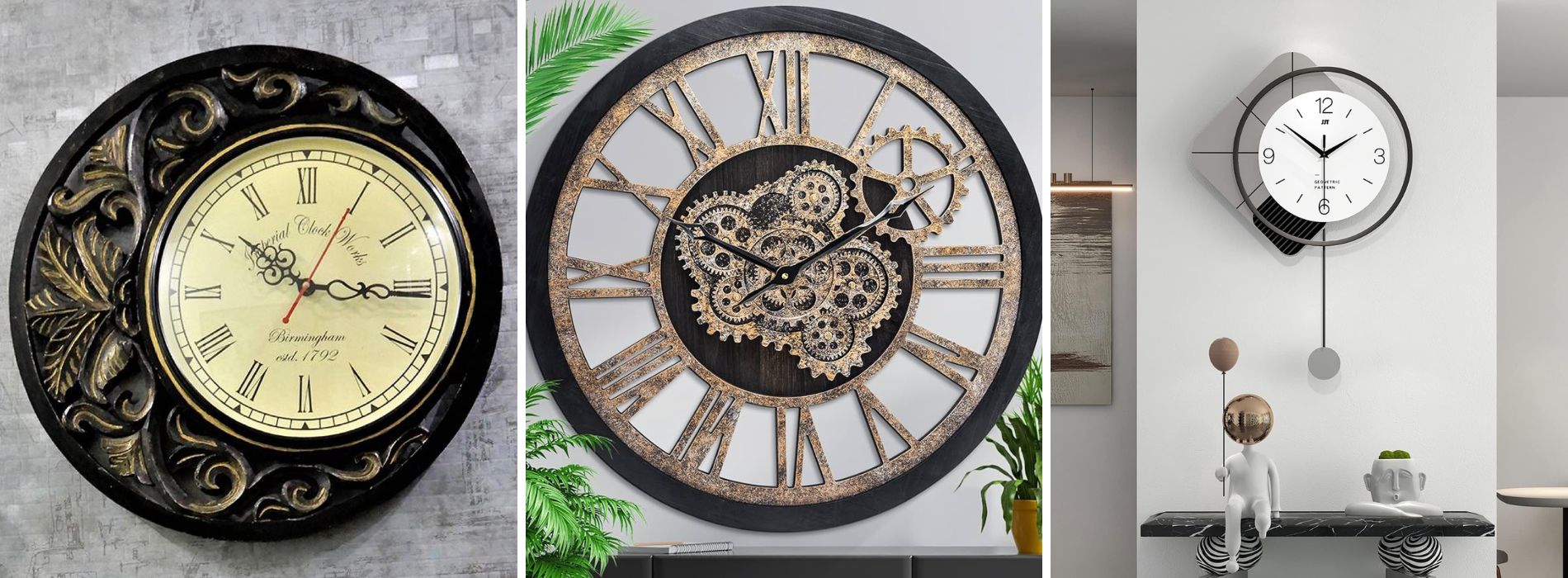
The different types of clocks
Clocks play an essential role in our lives by marking time, organizing our days, and setting the rhythm of our activities. They are far more than simple instruments; they become our constant companions, helping us manage our obligations and appreciate every moment.
In this article, we will explore various facets of clocks throughout history and their current use. In the first section, we will dive into the importance of traditional clocks such as sundials and hourglasses. Next, we will cover mechanical clocks, highlighting pendulum and spring clocks, explaining how they work and their aesthetic appeal. The third section will focus on electronic clocks, emphasizing their precision and their role in revolutionizing our daily lives. In the fourth section, we will discover digital and smart clocks, exploring their adaptability to modern needs. Finally, the fifth section will concentrate on solar and lunar clocks, highlighting their historical use, particularly in maritime navigation, and their artistic appeal. In conclusion, we will summarize the importance of these various types of clocks and their continuing role in our daily lives.
You will discover the many facets of clocks, from ancient to modern, while answering the question: “What are the different types of clocks?“
Traditional Clocks
The first section of our exploration of clocks is dedicated to traditional clocks, rudimentary yet fascinating devices that have played a crucial role in measuring time throughout history.
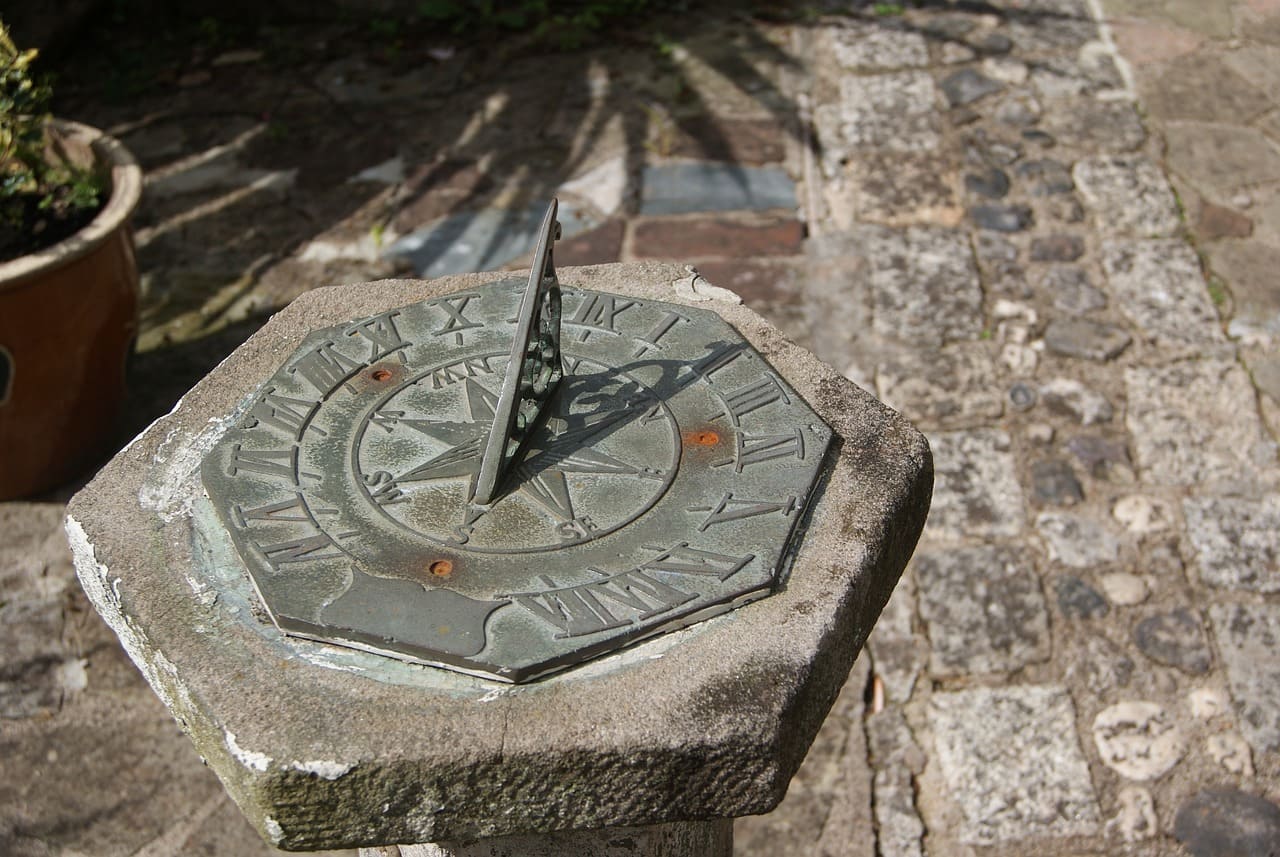
Traditional clocks hold undeniable historical significance. Before the era of modern technology, these clocks were the guardians of time. Sundials, for example, were among the first time-measuring tools used by humanity. They worked by using the shadow of a gnomon (a vertical rod) projected onto a numbered dial, with the position of the shadow indicating the time. Sundials were essential for farmers, navigators, and religious communities, allowing them to plan their activities according to the movement of the sun.
Hourglasses, on the other hand, were used to measure predetermined durations by allowing sand to flow through a narrow neck. They were often used in time management during games, speeches, and practical tasks. These clocks were a simple and effective way to measure the passing of time, and their use was widespread throughout the world.
Regarding how traditional clocks work, sundials were primarily based on the position of the sun in the sky. The movement of the sun created changing shadows, providing an indication of the time. Hourglasses operated on a mechanical principle, where sand flowed steadily through the neck, marking the passage of time.
These traditional clocks were integrated into many aspects of daily life. Sundials, for example, were used to plan agricultural activities and religious rituals. Hourglasses were employed in a variety of tasks, from timing political speeches to managing time at sea for sailors.
Other traditional clocks, such as water clocks and candle clocks, are the subject of growing interest as historical curiosities. Clock enthusiasts appreciate the elaborate mechanics underlying their operation.
Some master clockmakers create high-quality traditional clocks inspired by ancient designs and mechanisms. These creations are often considered works of art and collector’s pieces.
Although traditional clocks are no longer the primary time-measuring instruments in our daily lives, they continue to embody the history of timekeeping and to remind us of the ingenuity of our ancestors in their search for precise ways to quantify the passing of time. Their persistent presence in our modern world is a testament to their durability and timeless appeal.
Mechanical Clocks
The second section of our exploration of clocks focuses on mechanical clocks, engineering marvels that have played an essential role in timekeeping and continue to fascinate with their complex workings and beauty.
Mechanical clocks, particularly pendulum clocks and spring-driven mechanical clocks, have been pillars of timekeeping for centuries. They were at the epicenter of daily life, adorning homes, churches, and public buildings, and playing a vital role in synchronizing human activities.
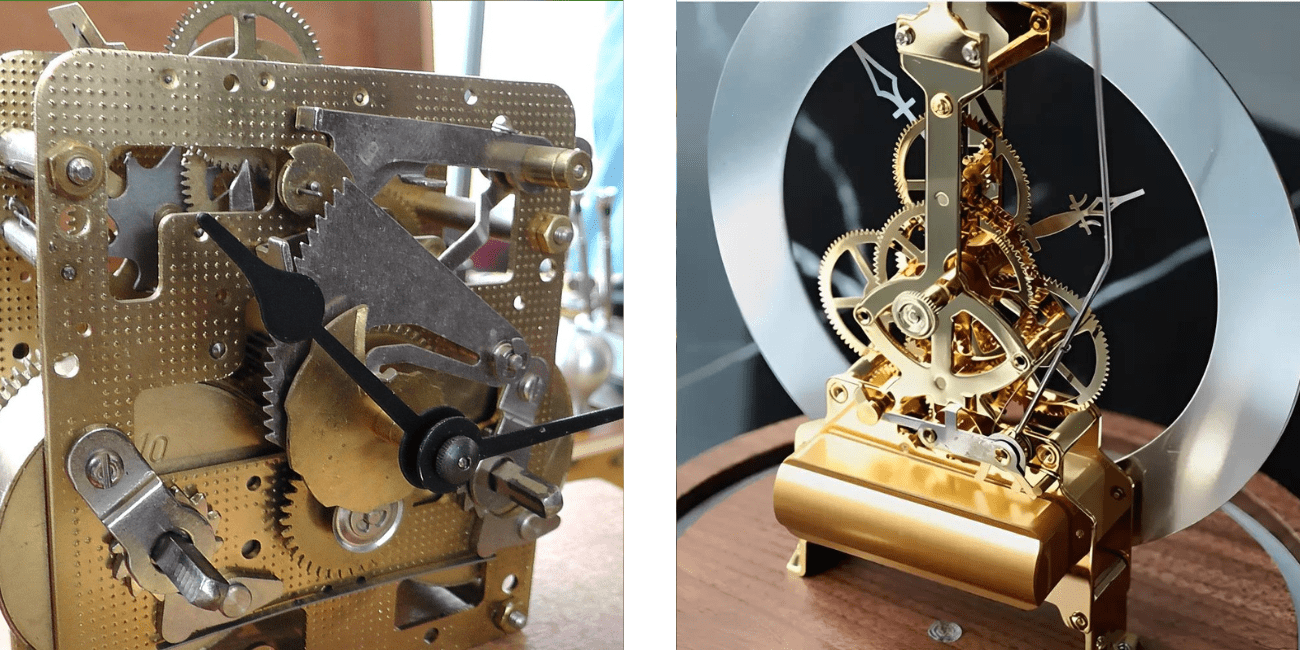
The operation of mechanical clocks is based on sophisticated mechanical principles. Pendulum clocks, for example, use the regularity of the pendulum’s oscillations to measure time. A clockwork movement keeps the pendulum in motion, and a gear train ensures the accuracy of timekeeping. Spring clocks, on the other hand, use the energy stored in a spring to power the clockwork movement, which then regulates the speed of the clockwork mechanism.
The key components of these clocks include the pendulum or a Balance Wheel (in the case of pendulum clocks), the clockwork mechanism, gears, hands, and the dial. Each component is designed to function with incredible precision, ensuring reliable and consistent timekeeping.
Beyond their functionality, mechanical clocks were also works of art in their own right. Their cases were often beautifully ornate, combining function and aesthetics. The clockmakers of the era deployed exceptional craftsmanship to create clocks that were both precise instruments and elegant collector’s pieces.
Although mechanical clocks have been largely replaced by electronic clocks for precise timekeeping, they continue to captivate collectors and clock enthusiasts due to their historical heritage and timeless beauty. Their past popularity and undeniable aesthetic appeal make them precious witnesses to human ingenuity in the pursuit of temporal precision.
Electronic Clocks
The third section of our exploration of clocks focuses on electronic clocks, devices that have revolutionized timekeeping thanks to their unmatched precision and reliability.
Electronic clocks encompass a variety of models, but two dominant types are quartz clocks and atomic clocks. Quartz clocks use a quartz crystal to generate a precise electrical pulse, which is then converted into a time measurement. Atomic clocks, on the other hand, are the most accurate of all, using the vibrations of atoms (generally caesium atoms or other elements) to define the duration of a second with extreme precision.
The precision of electronic clocks is remarkable. Quartz clocks, common in watches and wall clocks with a quartz movement, can lose less than one second per day, while atomic clocks are so accurate that they lose only a tiny fraction of time over billions of years. This precision has revolutionized our daily lives by synchronizing our activities, from global communications to navigation systems and electrical grids.
Electronic clocks have enabled the creation of global time synchronization systems, such as International Atomic Time (TAI) and Coordinated Universal Time (UTC), which are essential for air, space, and maritime navigation. Furthermore, they are integrated into a multitude of devices, from computers to smartphones and GPS systems, ensuring that time is measured with unwavering reliability.
Electronic clocks have marked a major milestone in the history of timekeeping. Their exceptional precision has had a profound impact on our daily lives, enabling precise coordination of human activities on a global scale and ensuring that we are always in sync with the passing of time. If you want to know how to hang a wall clock safely, consult our article HANG A WALL CLOCK
Digital and Smart Clocks
The fourth section of our exploration of clocks shines a spotlight on digital and smart clocks, modern devices that combine functionality and technology to meet contemporary time management needs.
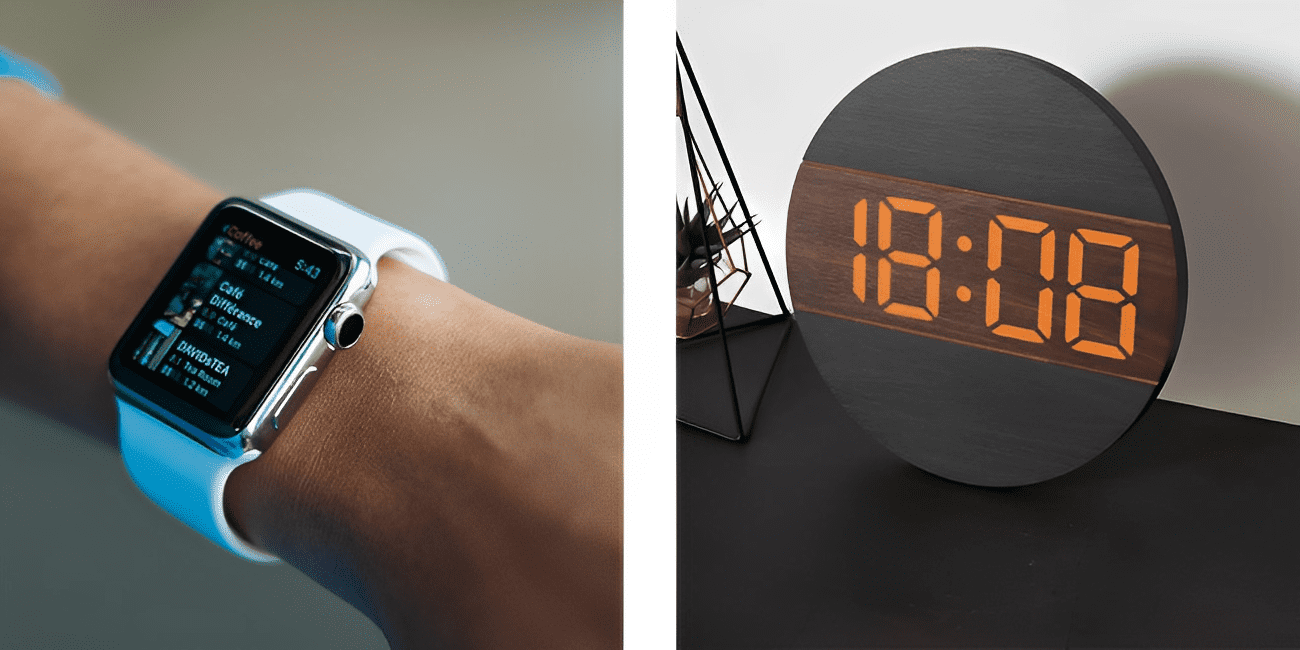
Digital clocks, such as LED display clocks and LCD clocks, have become ubiquitous in our daily lives. They offer precise and easy time reading thanks to their digital displays. LED clocks, with their luminous digits, are commonly used in low-light environments, while LCD display clocks are valued for their versatility and readability.
However, smart clocks represent the major evolution in clockmaking. They integrate advanced features by connecting to the Internet and offering a variety of applications. Smartwatches, for example, offer far more than simple timekeeping. They allow you to receive notifications, monitor physical fitness, manage appointments, and much more. These clocks adapt to our busy lives by providing real-time information and facilitating the management of multiple aspects of our daily routine.
Smart clocks have also become fashion accessories and personal technological companions. They offer extensive customization, with interchangeable dials and third-party applications that expand their functionality. Their ability to sync with smartphones and computers makes them versatile tools for communication, productivity, and leisure.
Digital and smart clocks embody the successful marriage of watchmaking tradition and modern technology. They meet the needs of our time by providing precise timekeeping while offering advanced features and personalization. These clocks have become indispensable tools for time management and elegant accessories for technology enthusiasts.
Solar and Lunar Clocks
The fifth section of our exploration of clocks focuses on solar and lunar clocks, ancient devices that draw their inspiration from the cosmos to measure time in a creative way.
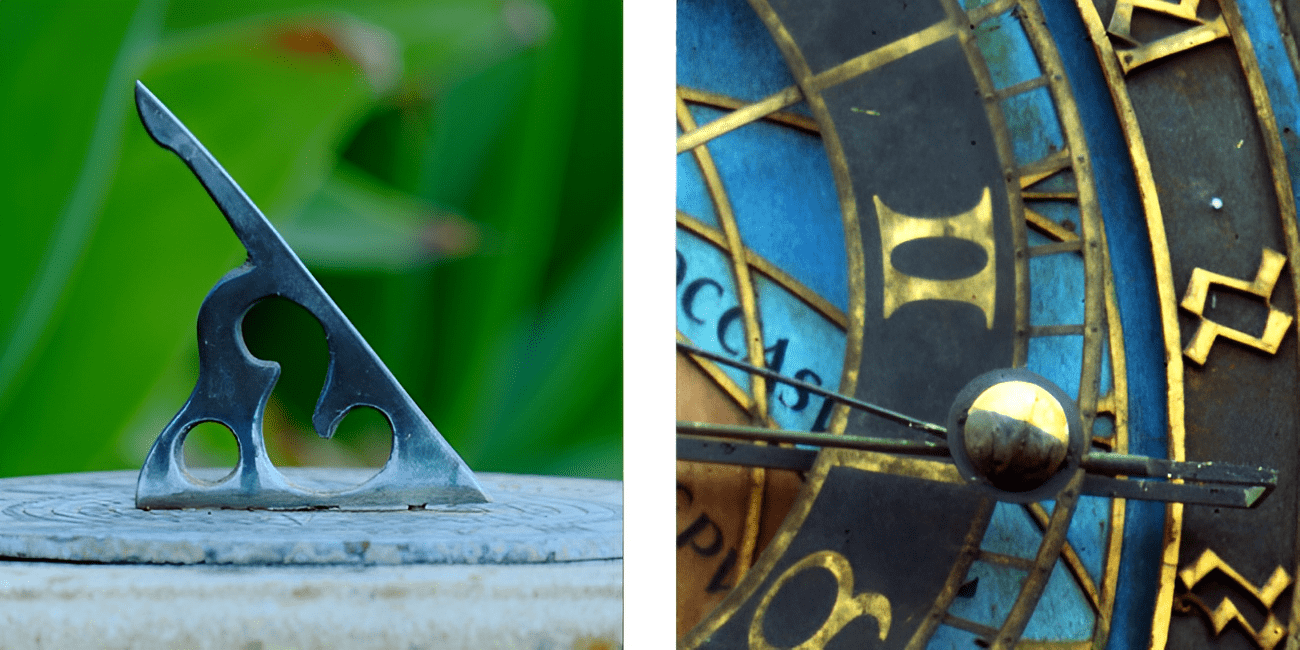
Solar and lunar clocks are fascinating testaments to the way ancient civilizations used celestial movements to measure time. Solar clocks are based on the position of the sun in the sky to indicate the time, while lunar clocks use the phases of the moon.
These clocks played a crucial role in maritime navigation, where it was essential to measure time precisely in order to determine longitude. Sailors used solar clocks to calculate their position at sea, while lunar clocks, such as astrolabes and sextants, were indispensable for navigating using the stars and the moon as reference points. These clocks thus contributed to the exploration and discovery of new lands.
Although solar and lunar clocks have been largely replaced by more precise and user-friendly devices, their current relevance lies not so much in their functionality as in their artistic and historical appeal. Today, many ornamental sundials adorn gardens and public squares, offering nostalgic charm and a reminder of the importance of celestial cycles in our understanding of time.
Solar and lunar clocks are also appreciated for their artistic appeal. Their sophisticated design and creative use of celestial elements make them prized collector’s items and centrepieces in the art of clockmaking.
We hope this article has been useful in helping you understand what the different types of clocks are.
If you would like to receive our free Murs du Temps e-book “THE ULTIMATE GUIDE” for choosing the best wall clock for your home, along with interior decorating tips or exclusive offers on our products, don’t hesitate to subscribe to our newsletter. We will regularly send you tips to improve the look of your home and keep you informed of ongoing promotions in our Murs du Temps store. Thank you for choosing Murs du Temps for your interior decoration!