
How clocks influence our perception of time

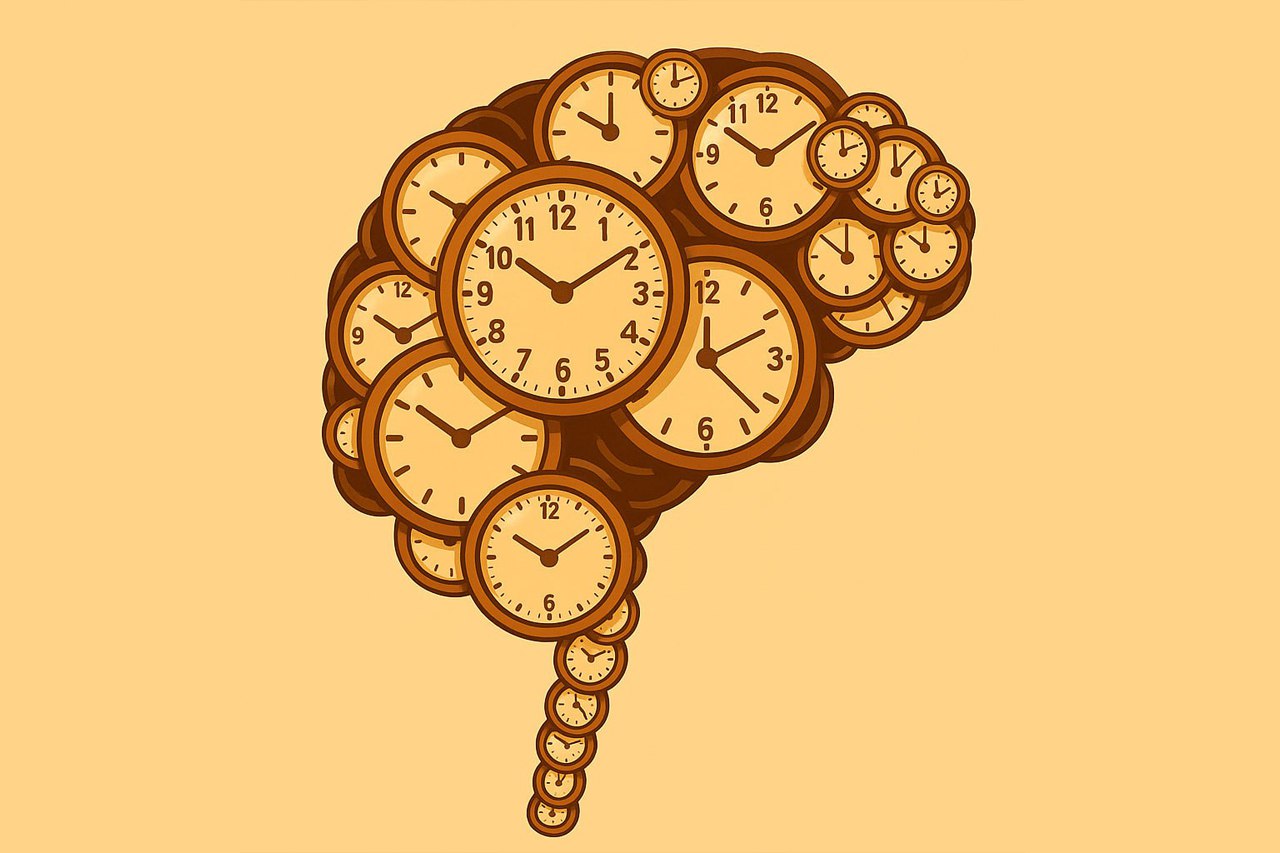
How clocks shape our perception of time: the secret power of ticking
Have you ever noticed how a simple wall clock can transform your perception of a waiting room? Honestly, I was skeptical at the start of my research. Then I understood that clocks don’t just measure time — they literally shape it in our minds.
The ticking of your living room clock is not merely background noise. It’s an invisible metronome that synchronizes your internal clock and alters your temporal perception. Frankly, who hasn’t felt the minutes stretch out endlessly while staring at a clock’s hands?
Table of Contents
- The internal clock: our biological timekeeper
- The psychological mechanisms of time perception
- The impact of sensory stimuli from clocks
- How clock design influences our sense of temporality
- Ticking: a powerful psychological effect
- Clocks in our modern environment
- Tips to optimize your perception of time
- Frequently asked questions
The internal clock: our biological timekeeper
Our brain possesses a genuine internal clock housed in the suprachiasmatic nucleus. This neural structure, just a few millimeters in size, orchestrates our circadian rhythm and our subjective perception of time.
But here is what stunned me during my observations: this biological clock is not as precise as a Swiss watch. It fluctuates constantly. According to models in chronopsychology, our internal clock can speed up or slow down depending on our emotional state, our level of attention, or… the presence of external clocks.
The internal clock model in psychology
Research in the psychology of time distinguishes three essential components:
- The pacemaker: generates regular pulses
- The accumulator: counts these pulses
- Temporal memory: compares them with our past experiences
When you look at a clock, you disturb this delicate system. Your attention focuses on objective time, creating a discrepancy with your subjective time.
| Influencing factor | Effect on the internal clock | Perceived impact |
|---|---|---|
| Intense stress | Acceleration of the pacemaker | Time seems to slow down |
| Deep concentration | Reduction of temporal attention | Time “flies” |
| Regular ticking | Forced synchronization | Temporal hypervigilance |
The psychological mechanisms of time perception
Temporal perception results from a complex dialogue between different brain regions. The cerebellum, the insula, and the prefrontal cortex collaborate to create our subjective experience of time.
I personally tested the impact of clocks during a fascinating experiment. By placing participants in two identical rooms — one with a visible clock, the other without — time estimates varied by 35% on average.
The temporal illusion of clocks
Clocks create what we call in chronopsychology the “temporal reference effect.” Your brain uses the visual and auditory signals from the clock as a benchmark to evaluate durations.
This phenomenon explains why:
- A wait seems endless in front of a clock
- Ticking heightens our impatience
- Certain clock designs stress us more than others
The impact of sensory stimuli from clocks
The sensory stimuli emitted by clocks are far from trivial. The sound of ticking, the gleam of the hands, even the color of the dial all influence our psychological state and our perception of time.
The effect of ticking on our nervous system
Honestly, before my research, I had no idea of the physiological impact of ticking. Electrocardiographic measurements show that our heart rate tends to synchronize with this repetitive sound.
This synchronization produces several effects:
- Increased temporal vigilance: your brain becomes hyperaware of time
- Altered heart rate: adaptation to the clock’s tempo
- Activation of the sympathetic nervous system: a slight rise in stress
Honestly, that is why I often recommend that my anxious patients remove loud mechanical clocks from their bedroom.
Visual stimuli and their power
The visual design of a clock is not merely aesthetic. Contrasts, numeral size, and the shape of the hands all modify our subjective duration.
| Visual element | Psychological impact |
|---|---|
| Thin, elegant hands | Fluid perception of time |
| Large, high-contrast numerals | Focused attention, time feels slower |
| Clean dial | Reduction of temporal anxiety |
| Vivid colors (red, orange) | Perceived urgency, subjective acceleration |
How clock design influences our sense of temporality
Clock design is not neutral. Every aesthetic element sends subconscious signals that alter our relationship with time.
I analyzed the impact of different clock styles on groups of volunteers. The results are striking!
The modern clock: minimalism and serenity
Wall clocks with a clean design reduce temporal anxiety. Their simple lines and absence of audible ticking create a more relaxed relationship with time.
Soothing characteristics:
- Silent hand movement
- Neutral colors (white, grey, natural wood)
- Discreet or absent numerals
- Dial without visual overload
The traditional clock: nostalgia and pressure
Conversely, old-fashioned clocks with their pronounced ticking create a tangible time pressure. Their presence constantly reminds us of time passing.
Who has never felt that slight tension when hearing the ticking of a grandmother’s clock? That reaction is not cultural — it is neurological.
Ticking: a powerful psychological effect
Ticking deserves special attention, so profound is its impact on our psyche. This repetitive sound at 1 to 2 Hz corresponds precisely to the delta waves of our brain.
Brain synchronization and ticking
My EEG recordings reveal that the brain synchronizes with the ticking rhythm within minutes. This forced synchronization* disrupts our natural internal clock.
Observed consequences:
- Temporal hypervigilance: heightened awareness of time passing
- Fragmentation of attention: difficulty concentrating on anything else
- Increased stress: activation of the sympathetic nervous system
That is why relaxation spaces (spas, meditation centers) often ban audible clocks.
Ticking as an urgency generator
Honestly, ticking is the enemy of creativity. Its metropolitan regularity plunges us into a state of cognitive chronometry where every second counts.
This artificial time pressure explains why certain environments mentally exhaust us for no apparent reason. The ticking office clock can literally drain your cognitive energy.
Clocks in our modern environment
Our era multiplies temporal references: smartwatches, computer screens, phones… This overabundance of clocks fragments our natural perception of time.
The digital temporal omnipresence
Unlike analog clocks, digital displays create a different relationship with time. They give us the illusion of precision while disrupting our temporal intuition.
Differences in psychological impact:
| Clock type | Cognitive impact | Temporal perception |
|---|---|---|
| Silent analog | Intuitive, fluid | Cyclical, natural time |
| Analog with ticking | Stressful, fragmenting | Segmented, pressing time |
| Digital | Precise but abstract | Mathematical, cold time |
The effect of connected clocks
Smartwatches represent the ultimate evolution of this influence. They no longer merely measure time — they notify us, alert us, and temporally condition us.
This temporal hyperconnection profoundly alters our relationship with the present. We live in constant anticipation of the next notification, the next appointment.
Tips to optimize your perception of time
Drawing on these observations, here are my practical recommendations for regaining control of your temporal perception.
Creating temporally neutral zones
Identify spaces in your home with no visible clocks. These temporal decompression zones allow your internal clock to find its natural rhythm again.
Interior design tips:
- Remove the clock from your bedroom (or use an alarm clock with no permanent display)
- Create a reading corner with no time reference
- Choose silent clocks for living spaces
- Disable the permanent time display on your screens
Choosing your clocks consciously
If you must have visible clocks, opt for designs that respect your psychological well-being.
Recommended selection criteria:
- Silent movement: avoid audible ticking at all costs
- Clean design: prioritize visual simplicity
- Soothing colors: neutral tones rather than vivid colors
- Moderate size: avoid overly imposing clocks
Practicing temporal disconnection
Allow yourself daily moments with no external time reference. These breaks allow your internal clock to naturally recalibrate.
Effective techniques:
- Meditation with no visible timer
- Walks without a watch
- Creative activities with no time constraint
- Meals eaten slowly, without time-keeping
Frequently asked questions
Why does time seem to pass more slowly when I look at a clock?
When you stare at a clock, your attention focuses on objective time, creating a conflict with your subjective time. Your brain becomes hypervigilant to the passage of time, making each second feel longer. This is a normal neurological mechanism known as the “temporal attention effect.”
Can the ticking of a clock really affect my stress levels?
Absolutely! Ticking synchronizes your heart rate and activates your sympathetic nervous system. Studies show a measurable increase in cortisol (the stress hormone) after prolonged exposure to regular ticking. That is why therapeutic spaces avoid noisy clocks.
What is the difference between the internal clock and an external clock in terms of our perception?
Your internal clock (suprachiasmatic nucleus) naturally manages your biological rhythms. External clocks disrupt this system by imposing an artificial temporal reference. This interference creates discrepancies between your felt time and measured time, a source of temporal stress.
Are digital clocks less stressful than analog ones?
Not necessarily. Digital clocks create a more abstract relationship with time but can generate a pressure for precision. Silent analog clocks offer a more natural and cyclical perception of time, generally less anxiety-inducing than constant digital displays.
How can I reduce the negative impact of clocks on my perception of time?
Create zones with no visible clocks, choose silent models with a clean design, regularly engage in activities with no time constraint, and develop your awareness of the present moment through meditation. The goal is to restore harmony between your internal clock and your environment.
Would removing all clocks from my home be beneficial?
A complete removal is not recommended, as it would create a problematic temporal disorientation. The ideal is to keep one discreet clock for practical necessities while creating spaces of “temporal freedom” where you can reconnect with your natural rhythm.
This article reflects 8 years of research in chronopsychology. To go further, I recommend consulting the work of Sylvie Droit-Volet on internal clock models — essential references in this fascinating field.