
How to properly position your wall clock

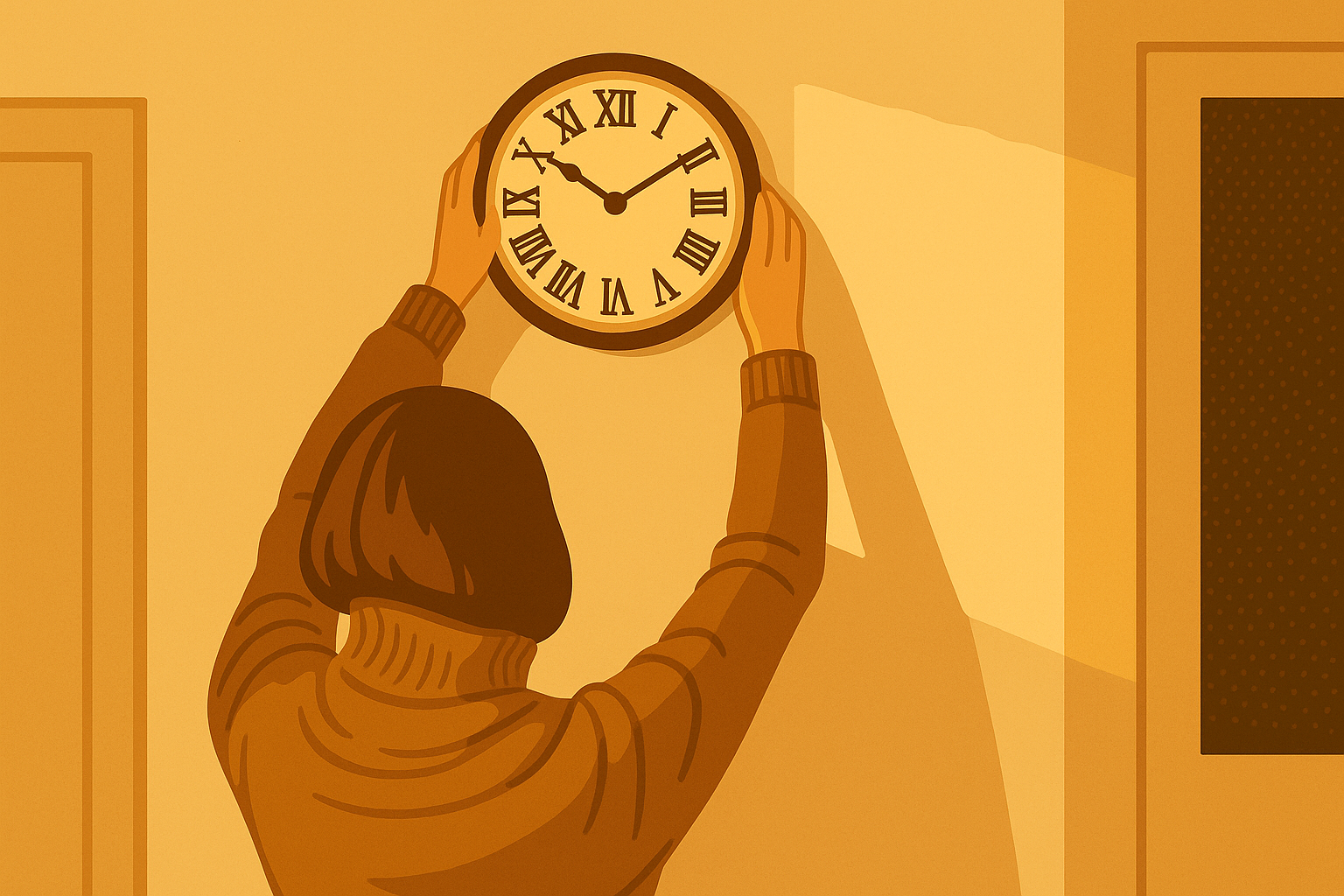
How to Properly Position Your Wall Clock: The Complete Guide to a Perfect Interior
You’ve just acquired a magnificent wall clock and now the big question arises: where do you hang it? Honestly, I used to think you could just place it anywhere on the wall. What a mistake! The position of a wall clock can transform your interior décor or, on the contrary, create a visual imbalance. Between feng shui rules, the ideal height and decorative harmony, properly positioning your wall clock is almost an art form.
Table of Contents
- The ideal height for hanging a wall clock
- Feng shui principles for positioning your clock
- Room-by-room positioning tips
- Creating perfect decorative harmony
- Common mistakes to absolutely avoid
- Frequently asked questions
The Ideal Height for Hanging a Wall Clock
The ideal height for positioning a wall clock is between 1.50 metres and 1.70 metres from the floor. This measurement corresponds to the eye level of an average-height person. But honestly, who in your household is exactly 1.65m tall?
Here are the precise rules I apply systematically:
- Standard height: 1.60m from the floor to the centre of the clock
- Above a piece of furniture: 20 to 30cm between the furniture and the bottom of the clock
- Free wall: Adjust according to the average height of the occupants
- Hallway or passageway: Opt for 1.65m for optimal readability
Recommended height table by room
| Room | Recommended height | Specifics |
|---|---|---|
| Living room | 1.50 – 1.60m | 20cm above the sofa |
| Kitchen | 1.60 – 1.70m | Visible from the worktops |
| Bedroom | 1.55 – 1.65m | Facing the bed for easy reading |
| Office | 1.40 – 1.50m | Visible from a seated position |
Feng Shui Principles for Positioning Your Clock
Feng shui considers the clock an energy activator. I was sceptical at first, but after repositioning the clocks in my apartment according to these principles, the atmosphere genuinely changed.
Favourable positions in feng shui:
- Near the entrance door on the left side: Activates positive energy
- Facing a window: Promotes the circulation of chi
- East or South-East wall: Zones of prosperity and growth
Locations to avoid according to feng shui:
- In the centre of the room (energetic disturbance)
- Facing the bed in the bedroom
- Above the entrance door
- In dark corners
Honestly, who would have thought that the position of a simple clock could influence the harmony of a space? Yet these age-old rules are well worth considering.
Room-by-Room Positioning Tips
In the living room: creating a focal point
The living room is the main living space. Your clock must integrate harmoniously without dominating the wall décor. Personally, I always favour positioning it above the sofa, exactly 20 centimetres from the back.
This position offers several advantages:
- Visibility from every seat
- Creation of a natural focal point
- Visual balance with other decorative elements
In the kitchen: practicality above all
The kitchen demands a different approach. Here, function takes precedence over aesthetics. Place your clock in a spot where it remains visible during meal preparation. A height of 1.60 to 1.70 metres ensures easy reading from the worktops.
In the bedroom: discretion and serenity
For the bedroom, I recommend positioning the clock facing the bed, but not directly above the headboard. This configuration lets you check the time easily without disturbing the soothing atmosphere of the room.
Creating Perfect Decorative Harmony
A well-positioned clock integrates naturally into your décor. It should neither disappear nor monopolise attention. The art lies in the balance.
The golden rules of decorative integration:
- Proportionality: Match the size of the clock to the available space
- Stylistic consistency: Harmonise with the overall style of the room
- Spacing: Allow breathing room around the clock
- Lighting: Avoid annoying reflections
Honestly, it took me a while to understand that the placement of a clock could completely change the perception of a room. A clock hung too high gives an impression of inaccessibility, while a position that is too low causes it to disappear from the field of vision.
Comparison table: Visual impact according to position
| Position | Visual impact | Advantages | Disadvantages |
|---|---|---|---|
| Ideal height (1.60m) | Balanced | Optimal readability | None if well executed |
| Too high (>1.80m) | Dominant | Does not obstruct circulation | Difficulty reading |
| Too low (<1.40m) | Discreet | Accessible to children | Risk of knocks |
Common Mistakes to Absolutely Avoid
After observing many interiors, certain mistakes come up time and again. Let me spare you these pitfalls!
Mistake #1: Neglecting the lighting
A clock placed in a poorly lit area loses all its appeal. Worse still, reflections on the glass can make it impossible to read. Check both natural and artificial lighting before drilling into the wall.
Mistake #2: Ignoring the sound environment
Who hasn’t been disturbed by the incessant ticking of a poorly positioned clock? In the bedroom, opt for silent models or place the clock far enough from the bed.
Mistake #3: Poor assessment of proportions
An oversized clock on a small wall creates a visual imbalance. Conversely, a small clock gets lost on a large surface. The rule: the clock should occupy approximately 1/3 of the width of the available space.
Technical mistakes to avoid:
- Inadequate fixings: Use wall plugs suited to the weight
- Non-vertical wall: Check with a spirit level
- Proximity to a heat source: Watch out for radiators and fireplaces
- Non-adjustable height: Think about the different users
Frequently Asked Questions About Wall Clock Positioning
At what height should a wall clock be fixed in a living room?
In a living room, fix your wall clock between 1.50m and 1.60m from the floor. If it is positioned above a sofa, leave a 20cm gap between the back of the sofa and the bottom of the clock for perfect visual balance.
Can you place a clock facing the bed according to feng shui?
Feng shui advises against placing a clock directly facing the bed as its active energy can disrupt sleep. Opt for a side wall or use a silent clock if you have no other choice of placement.
How do you avoid reflections on a wall clock?
To avoid reflections, position your clock perpendicular to windows and direct light sources. Test different lighting angles before fixing it permanently and opt for matt rather than glossy clock faces.
What is the ideal distance between a clock and a piece of furniture?
Keep a distance of 20 to 30cm between the furniture and the bottom of the clock. This proportion creates visual harmony and avoids the “stuck on” effect that weighs down wall décor.
Should a clock be centred on a wall?
Not necessarily! If your wall features other decorative elements, create a balanced ensemble instead. What matters is respecting the proportions and maintaining an ideal height for readability.
How do you position several clocks in the same room?
If you wish to install several clocks, vary the heights while staying within the 1.50-1.70m range. Avoid perfect alignment, which would create a monotonous effect, and opt for a harmonious distribution throughout the space.
Now that you have mastered the art of properly positioning your wall clock, you can transform this functional object into a true decorative feature. Remember: the ideal height, harmony with your décor and the principles of feng shui are your greatest allies for a perfect result. A well-positioned clock does not simply tell the time — it sets the rhythm of your interior with style and elegance.