
Ideal modern clocks for the living room

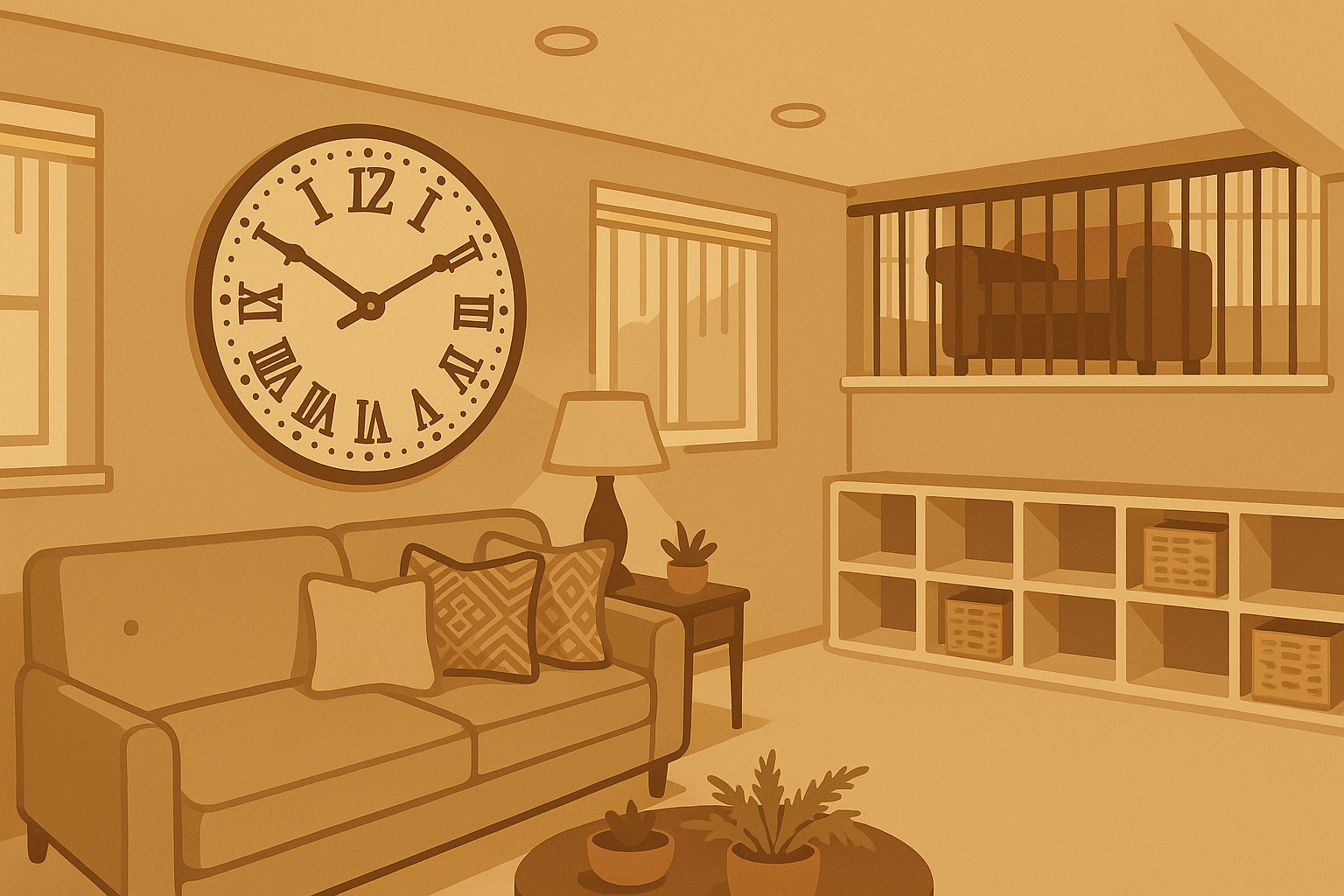
Modern Living Room Clocks: How to Choose the Perfect Piece for Your Décor
Your living room deserves better than a basic clock hung randomly on the wall. Honestly, I was skeptical at first: how can a clock truly transform a space? Then I discovered the power of a well-chosen modern clock. It instantly becomes the focal point of your living room, combining functionality and aesthetics in perfect balance.
In this complete guide, we’ll explore together the 2024 trends, the essential criteria for making the right choice, and above all how to harmonize your new clock with your existing décor. Ready to give your living room a whole new dimension?
Table of Contents
- Why choose a modern clock for the living room?
- Trending modern clock styles in 2024
- Essential criteria for making the right choice
- Where and how to position your clock?
- Materials and finishes to prioritize
- How to harmonize with your décor
- Maintenance and lifespan
- Frequently asked questions
Why Choose a Modern Clock for the Living Room?
The living room is the heart of the home. The place where you relax, entertain guests, and spend your evenings. Honestly, who hasn’t instinctively glanced at the clock wondering whether it’s time to start dinner?
A modern wall clock does more than just tell the time. It structures the space, creates a visual anchor point, and reveals your personality. Unlike traditional models, contemporary clocks integrate naturally into today’s interiors without creating any stylistic break.
The advantages of a modern clock:
- Clean design: sharp lines and geometric shapes that harmonize with current trends
- Optimized functionality: silent mechanisms, clear display, sometimes connected features
- Durable materials: treated metals, tempered glass, time-resistant finishes
- Immediate decorative impact: instant transformation of the room’s atmosphere
Trending Modern Clock Styles in 2024
This year, I’ve noticed that certain styles are really standing out. Trends evolve, but a few constants clearly emerge.
The Minimalist Style
Minimalist design continues to dominate. Think clean dials, slender hands, discreet or absent numerals. These contemporary wall clocks exude serenity and adapt to any environment.
| Characteristics | Advantages | Disadvantages |
|---|---|---|
| Clean lines, neutral colors | Timeless, easy to match | Can feel cold in some interiors |
| Visible or hidden mechanism | Discreet, doesn’t overload the space | Readability sometimes reduced |
| Premium materials (metal, glass) | High perceived quality | Generally higher price |
The Industrial Style
The industrial clock is a massive hit this year! Raw metals, controlled rust, bold numerals… These pieces bring character and an unapologetically masculine edge. Perfect for lofts or contemporary urban interiors.
LED and Digital Clocks
Technology is making its way into our living rooms with LED clocks. Customizable display, adjustable brightness, sometimes even WiFi connectivity. These models appeal to tech enthusiasts without sacrificing aesthetics.
The Scandinavian Style
The Scandinavian style remains a safe bet. Light wood, organic shapes, soft colors… These clocks bring warmth and a natural feel, creating a cocooning atmosphere that’s particularly welcome in the living room.
Essential Criteria for Making the Right Choice
Choosing a modern clock for your living room is a bit like choosing a suit: it’s all about proportions and harmony. Let me share with you the criteria I’ve learned to prioritize.
Size: A Matter of Proportions
A large wall clock (60–80 cm) completely transforms a wall, but be careful not to overwhelm the space! For a standard living room, aim for 40–50 cm in diameter. Too small and it goes unnoticed; too large and it dominates.
Size criteria by space:
- Small living room (under 20m²): 25–40 cm in diameter
- Medium living room (20–35m²): 40–60 cm in diameter
- Large living room (over 35m²): 60–80 cm and above
The Mechanism: Silence and Precision
A silent clock is non-negotiable in a living room! The notorious ticking can quickly become irritating, especially during quiet evenings in front of the TV. Opt for quality quartz mechanisms or digital versions.
Readability
A beautiful clock that can’t be read clearly is just a decorative object. Make sure the numerals or markers are sufficiently contrasted and sized for easy reading from a distance.
Where and How to Position Your Clock?
I’ve tested different positions in my living room, and trust me, placement changes everything! The ideal location depends on your layout, but a few universal rules apply.
Strategic Placement Spots
The wall facing the sofa remains the most popular choice. Why? Simple: it’s where your gaze naturally falls. An interesting alternative: the adjacent wall, which creates visual dynamics without being too imposing.
Height and Centering
Install your modern wall clock between 1.50m and 1.70m from the floor. This height ensures optimal visibility from all seated positions. And most importantly, center it in relation to the surrounding furniture, not the wall!
Installation tips:
- Avoid high-traffic areas: risk of accidental bumps
- Keep away from heat sources: radiators, fireplaces, south-facing bay windows
- Check the strength of the support: some designer clocks are heavier than they appear
Materials and Finishes to Prioritize
The choice of metallic materials is exploding this year. Brushed steel, anodized aluminum, patinated copper… These finishes deliver immediate sophistication and age with elegance.
Trending Materials
| Material | Style | Durability | Maintenance |
|---|---|---|---|
| Brushed metal | Modern, industrial | Excellent | Easy |
| Solid wood | Scandinavian, natural | Very good | Moderate |
| Tempered glass | Contemporary, clean | Good | Regular |
| ABS plastic | Designer, colorful | Average | Easy |
Trending Finishes and Colors
Matte black dominates the 2024 trends. This color integrates perfectly into any interior and creates an elegant contrast. Rose gold and copper add a welcome touch of warmth to modern interiors that can sometimes feel austere.
How to Harmonize with Your Décor
Harmonizing a clock with your modern living room décor is an art in itself. The goal? Create visual coherence without falling into boring uniformity.
Contemporary Living Room
In a living room with clean lines, go for a contemporary wall clock with bold geometric shapes. Neutral colors (white, grey, black) integrate naturally without creating a stylistic break.
Colorful Living Room
Opted for a colorful living room? Two strategies: either choose a clock in neutral tones to balance things out, or commit fully with a piece in a complementary color. Watch out for excess!
Harmonization rules:
- Respect the 3-color maximum rule in the room
- Repeat materials: metal on the clock = metal on the light fixtures, for example
- Play on contrasts: dark clock on a light wall and vice versa
Maintenance and Lifespan
A quality modern wall clock can easily last 15–20 years with minimal maintenance. The secret? Choose durable materials and a reliable mechanism right from the start.
Routine Maintenance
A monthly dusting is generally sufficient. For metal models, use a slightly damp microfiber cloth. Avoid abrasive products that could damage the finishes.
Signs It’s Time to Replace
Persistent lag despite battery changes, a noisy mechanism, a fading dial… These signals indicate it’s time to replace your clock. Fortunately, with quality modern models, these issues rarely arise before several years of use.
Frequently Asked Questions About Modern Living Room Clocks
What size clock should I choose for a 25m² living room?
For a 25m² living room, opt for a clock with a diameter of 40 to 50 cm. This size provides optimal visual presence without dominating the space. A large wall clock over 60 cm would risk overwhelming the room.
Do LED clocks consume a lot of electricity?
No, modern LED clocks consume very little power thanks to low-energy LED technology. Expect between 2 and 8 watts depending on the model, which is less than a conventional light bulb. Some even run on batteries with an autonomy of several months.
How do I avoid ticking noise?
Choose a silent clock with a sweep quartz mechanism (continuous sweep) rather than a stepping one. Digital models are naturally silent. Check customer reviews that specifically mention noise levels.
Can a heavy clock be installed on a drywall partition?
Yes, but use appropriate fixings such as Molly bolts for heavy loads. For an industrial clock weighing more than 2 kg, prioritize fixing to a wall stud or use distributed fixings.
How long does a clock battery last?
A quality AA battery generally lasts 12 to 18 months in a modern wall clock. Models with an efficient mechanism can reach 24 months. Avoid cheap batteries that leak and can damage the mechanism.
How do I clean a metal clock without damaging it?
Use a slightly damp microfiber cloth for everyday dust. For a deeper clean, use a product specifically designed for metal (stainless steel, aluminum…) following the direction of the grain. Avoid abrasive products and rough sponges.
Do modern clocks work with a classic style?
Absolutely! A contemporary wall clock with clean lines can integrate perfectly into a classic living room. Choose neutral colors and premium materials such as brushed metal or wood. The contrast effect is often highly successful.
Do modern clocks need to be manually adjusted for the time change?
It depends on the model. Classic quartz clocks require manual adjustment twice a year. Connected or radio-controlled models synchronize automatically. Some recent LED clocks even incorporate geolocation for automatic adjustment.
Your living room deserves a clock that reflects who you are. Whether it’s minimalist, industrial, or high-tech, what matters is that it harmonizes perfectly with your world while bringing that modern touch that makes all the difference. Take the time to choose wisely: it’s a decorative investment for many years to come!