
Wall clock: functional or decorative?

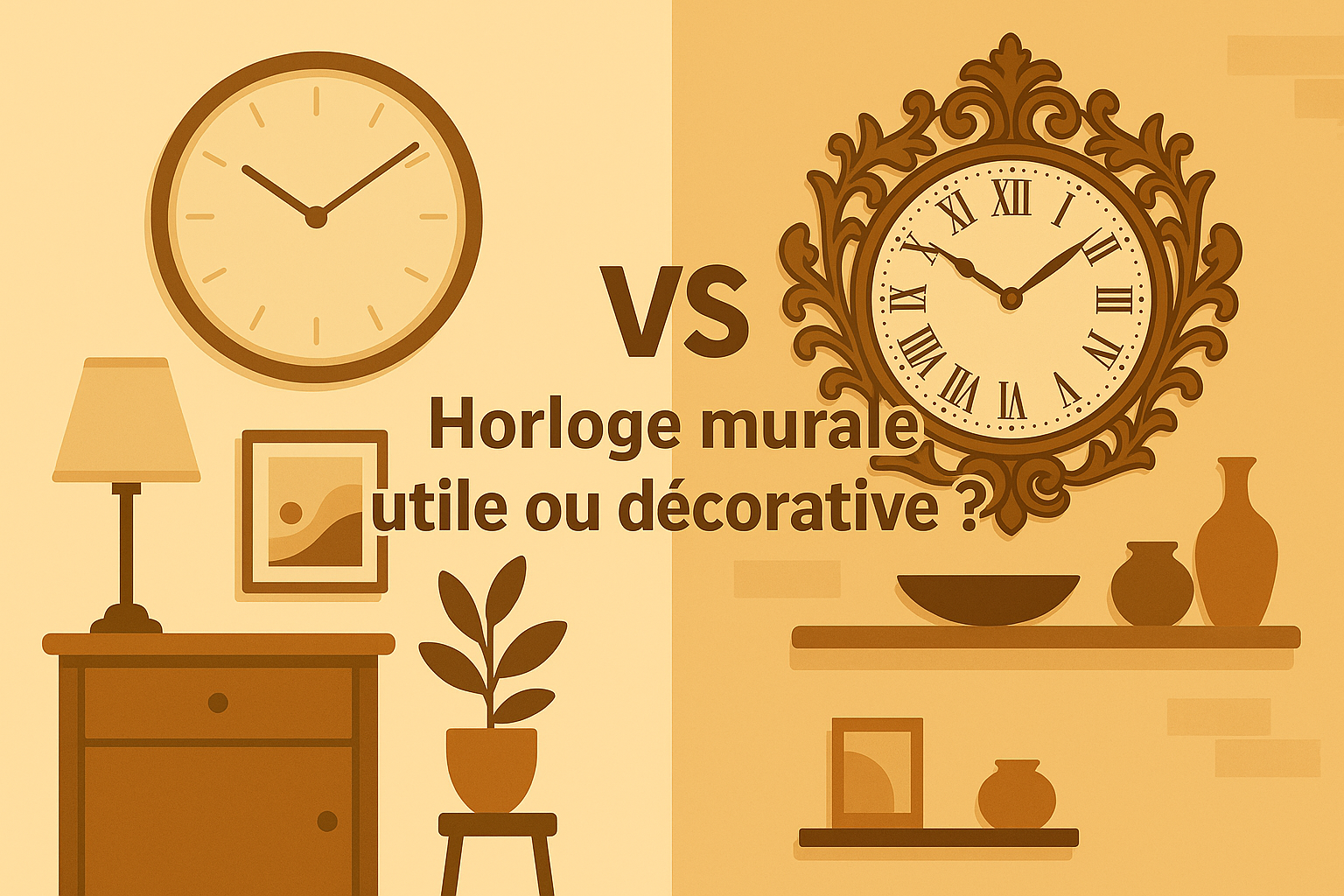
Wall Clock: Between Utility and Decoration, How to Choose the Perfect Timepiece?
Have you ever stood in front of a stunning wall clock wondering: “Am I buying it for its practical side or just because it looks beautiful?” Honestly, who hasn’t faced this dilemma! This question has been dividing décor enthusiasts and pragmatists for years. I’ll admit, I was skeptical at first when my mother-in-law told me that a decorative clock could completely transform a room.
But after testing several models in my own home, I have to admit she was right. A modern wall clock can perfectly combine functionality and aesthetics. So, should you prioritize the useful or the beautiful? The answer might just surprise you…
Table of Contents
- The functional role of the wall clock: more than just a gadget
- The clock as a major decorative element in your interior
- The different clock styles: from vintage to modern design
- How to choose between utility and decoration based on your needs
- Placement and harmonization: the secrets to successful integration
- Frequently Asked Questions
The functional role of the wall clock: more than just a gadget
Let’s start with the obvious: a wall clock is first and foremost there to tell the time. But don’t be fooled into thinking that’s its only value! In our hyper-connected era, where our smartphones constantly display the time, why install a wall clock?
The answer comes down to three words: practicality, visibility, and independence. Unlike your phone, which you have to find or wake up, the wall clock is permanently visible. Its face allows for instant reading, even from a distance. This is especially handy in the kitchen when your hands are busy, or at the office for managing your time without being tempted to check your notifications.
Concrete functional advantages
- Easy reading: Hands offer an intuitive perception of passing time
- Silent mechanism: Modern models operate without any disruptive noise
- Energy independence: A single battery can power your clock for over a year
- Reliability: No bugs, no updates — just the exact time
I installed a designer clock in my kitchen six months ago. The result? I check my phone far less while cooking, and my dishes no longer burn! A small domestic revolution.
The importance of precision in certain contexts
In certain rooms, functionality absolutely takes priority over aesthetics. Take a home office as an example: you need a reliable clock to manage your phone appointments. Or in a child’s bedroom, where learning to tell the time becomes a daily game.
| Room | Functional priority | Recommended size |
|---|---|---|
| Kitchen | Very high | 25-30 cm |
| Office | Very high | 20-25 cm |
| Living room | Medium | 30-40 cm |
| Bedroom | Low to medium | 15-25 cm |
The clock as a major decorative element in your interior
Now, let’s talk about the glamour side! A decorative clock can literally transform the atmosphere of a room. It’s a central element that draws the eye and structures the visual space. But beware — not all models are equal when it comes to wall decoration.
Honestly, I made a few mistakes at the start. My first purchase was an enormous industrial clock in metal that completely overwhelmed my small living room. Lesson learned: size must be proportional to the space!
The materials that make all the difference
The choice of material drastically influences the decorative impact. Wood brings warmth and authenticity, perfect for a vintage style. Metal creates a modern, clean aesthetic. Glass offers a touch of sophistication and lightness.
- Matte black metal: Ideal for a modern interior and minimalist aesthetic
- Natural wood: Perfect for Scandinavian or rustic décor
- Copper or brass: Adds a chic industrial touch
The art of creating a focal point
A well-chosen wall clock becomes the focal point of a room. It must harmonize with your furniture while bringing its own personality. It’s a delicate balance between integration and statement-making.
In my living room, I went for a designer clock with gold Roman numerals on a black background. It dialogues perfectly with my gold cushions and structures the entire space. My guests notice it every single time!
The different clock styles: from vintage to modern design
The wall clock market is literally exploding with creativity. From vintage style to ultra-contemporary creations, there is definitely a model for your interior. Let me guide you through this stylistic jungle.
The vintage style: rediscovered authenticity
Vintage clocks captivate with their authentic character. Weathered dials, retro numerals, exposed mechanism… They tell a story. It’s the perfect choice for wall decoration that bets on nostalgia and old-world charm.
My grandmother had a station clock from the 1950s. That aesthetic has always fascinated me! Today, modern reproductions deliver that vintage charm with contemporary reliability.
Modern design: clean lines and functionality
Contemporary designer clocks favor clean lines and premium materials. Gone are the traditional hands — minimalist creations take center stage, where every detail counts. These models integrate seamlessly into a modern interior.
- Numberless clocks: For lovers of absolute minimalism
- Geometric models: Hexagonal, triangular, asymmetric shapes
- Elegant digital versions: Discreet and modern LED display
Industrial style: ruggedness and character
The industrial clock borrows its codes from the factories and workshops of the past. Raw metal, exposed rivets, stencil typography… It brings a masculine and authentic touch to your décor.
| Style | Typical materials | Atmosphere created | Average price |
|---|---|---|---|
| Vintage | Wood, aged metal | Nostalgic, warm | 40-80€ |
| Modern | Glass, chrome metal | Clean, sophisticated | 60-150€ |
| Industrial | Raw metal, cast iron | Rugged, authentic | 50-120€ |
How to choose between utility and decoration based on your needs
So, functional or decorative? The real question isn’t about choosing, but finding the perfect balance! After testing around ten different models, I can assure you it is absolutely possible to combine functionality and aesthetics without compromise.
Analyze your real needs
First crucial step: define your priorities. Do you actually need to know the time in this room? Or are you rather looking to fill an empty wall? This reflection will determine the ideal type of wall clock.
In my bedroom, I opted for a silent decorative clock with discreet numerals. Why? Because I don’t want to be obsessed with the time as I fall asleep, but I appreciate its visual impact on the décor.
The essential selection criteria
- Dial size: The larger it is, the more decorative (and visible) it will be
- Readability: Sufficient contrast between the hands and the background
- Noise level: Opt for a silent mechanism for bedrooms
- Architectural style: Harmonization with your existing décor
Honestly, who would have thought that choosing a simple clock required so much thought? But it’s precisely this attention to detail that makes the difference between a successful purchase and a regret.
The perfect compromise: functionality AND beauty
The good news? Manufacturers have figured it out: we want it all! Modern designer clocks seamlessly integrate form and function. Gone is the dilemma — welcome to the best of both worlds.
My friendly advice? Invest in a quality wall clock that you love aesthetically AND that remains perfectly readable. Your future self will thank you for this balanced choice.
Placement and harmonization: the secrets to successful integration
Having the most beautiful wall clock in the world is pointless if it’s poorly placed! The location and integration within your wall decoration are crucial to making your décor project a success. Let me share my tried-and-tested tips from real experience.
The golden rules of placement
First rule: height. Your decorative clock should be placed at eye level, approximately 1.5–1.6 meters from the floor. Too high and it becomes unreadable. Too low and it loses its visual impact. I made this mistake in my kitchen by placing it too close to the countertop!
Second rule: visibility. Avoid positions where furniture or objects partially obscure the dial. A half-hidden clock loses its primary function entirely.
The art of decorative harmonization
Your wall clock must engage in dialogue with the other elements in the room. Colors, materials, styles… Everything matters! In my living room, I created a cohesive ensemble by pairing my copper clock with photographs framed in the same metal.
- Repeating materials: Echo the metal or wood of the clock elsewhere in the room
- Color echoes: Create subtle chromatic callbacks
- Respecting proportions: A large clock needs space to breathe
Avoiding common mistakes
Watch out for classic pitfalls! Never place a wall clock facing a window — reflections will make it difficult to read. Also avoid overly busy walls where it would get lost in a decorative jumble.
Honestly, it took me a while to understand these subtleties. But once mastered, they completely transform the impact of your designer clock!
Frequently Asked Questions
Does a wall clock need to be silent?
It depends on the room! For bedrooms and offices, absolutely opt for a silent mechanism. The constant ticking can become very irritating. In living areas like the lounge, it’s less critical, but silence remains more comfortable on a daily basis.
What size clock should I choose for my living room?
The general rule: for a wall measuring 3–4 meters, go for a wall clock with a diameter of 30–40 cm. Too small and it will go unnoticed. Too large and it will dominate the room. Measure your wall and aim for approximately 1/5 of its width.
How do you maintain a decorative clock?
Maintenance is minimal! Dust it regularly with a soft cloth, change the battery annually, and check the time occasionally. For metal models, a specialist product can restore the shine. Wood clocks benefit from an occasional light waxing.
Can you mix several clocks in the same room?
It’s risky but possible! The trick? Vary the sizes and styles while maintaining coherence (same material or same color). In a large open-plan room, 2–3 different designer clocks can create an original decorative effect. But be careful not to tip into overload!
Do connected clocks replace traditional models?
Not necessarily! Connected clocks offer more features (weather, notifications…) but sacrifice simplicity and aesthetics. For pure wall decoration, traditional models remain unbeatable. It all comes down to your priorities: high-tech or timeless charm?
So, will your next wall clock be functional or decorative? I hope I’ve convinced you that it can be both! The important thing is to choose a model that reflects your personality and integrates harmoniously into your interior. Whether vintage, modern, or industrial, your future wall clock will quickly become an indispensable feature of your décor. And above all, it will tell the time in style!